Sponsored article
Non-Slip Trays: How Do Surface, Material and Anti-Slip Layer Affect Long-Term Grip?
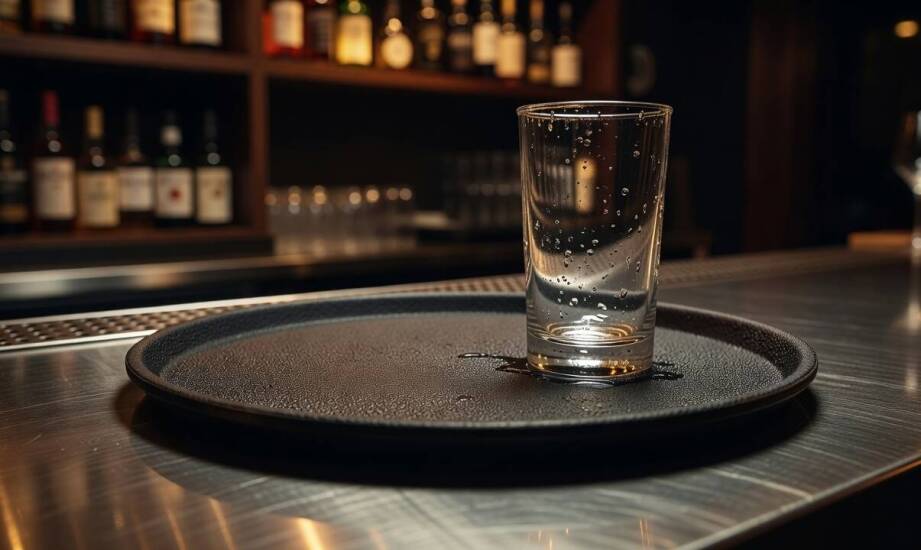
In bars, restaurants and other hospitality environments, a serving tray has to provide more than the right size and shape. The surface itself plays an important role in keeping glasses, bottles and cups stable while staff are moving.
Read more: The Impact of Mushroom Quality on Customer Satisfaction in the Gastronomy Sector
Grip depends on the interaction between the tray surface and the object placed on it. Material, surface structure and any additional anti-slip layer can therefore influence both everyday handling and long-term performance.
Read more: The Future of Coffee Roasting Machines: What Awaits Us?
For heavily used serving equipment, these properties also need to remain effective after repeated cleaning and normal mechanical wear.
Read more: The role of an individual approach in building long-term customer relationships
How Does Surface Texture Improve Grip?
A textured surface can increase resistance to sliding by changing the way the base of a glass or bottle contacts the tray.
However, grip cannot be assessed from surface roughness alone. It also depends on:
the material used for the tray;
the material at the bottom of the glass or bottle;
moisture on the surface;
contamination such as spilled drinks;
load and movement;
the shape and depth of the surface texture.
In injection moulding, a surface pattern can be reproduced directly from the mould onto the finished plastic component. This makes it possible to create a repeatable texture without adding a separate coating.
The final result nevertheless depends on both the mould surface and the polymer being processed.
Noex produces plastic promotional and hospitality products from the design and tooling stage through to injection moulding, allowing surface requirements to be considered together with the construction of the part.
Moulded Texture or Additional Anti-Slip Layer?
There is no single solution that is always best for a serving tray.
A texture formed directly in the plastic has the advantage of being part of the component itself. There is no separate layer that can detach from the substrate.
A softer anti-slip surface can provide a different type of grip by increasing friction between the tray and the objects placed on it.
In its current tray range, Noex offers models with PU and TPE anti-slip surfaces. Depending on the design, the rigid tray body and the anti-slip component therefore perform different functions.
The appropriate solution should be selected according to expected loads, cleaning requirements, type of drinks served and the intended service environment.
How Do Wear, Cleaning and Temperature Affect Tray Life?
A non-slip surface can gradually change during use.
Repeated movement of glasses and bottles may wear the contact area, while inappropriate cleaning can damage either the anti-slip layer or the printed decoration.
The effect of cleaning also depends on the material and construction of the particular model.
For that reason, it is not safe to assume that every hospitality tray can be exposed to the same dishwasher temperature or the same detergents.
Cleaning instructions should always be checked for the specific tray model.
This is particularly important for non-slip trays, because the manufacturer may specify particular limits for water temperature, detergents and cleaning tools depending on the product.
Using a cleaning method that is too aggressive can shorten the service life of the surface even when the base material itself remains mechanically sound.
How Does Material Affect an Anti-Slip Tray?
The performance of a tray depends on the complete material system rather than on a single polymer name.
Current Noex models include constructions combining a rigid polystyrene base with TPE, while other variants use PU anti-slip surfaces.
These materials fulfil different functions.
The rigid body provides shape and structural support, while the softer surface increases resistance to sliding.
When selecting a material combination, manufacturers need to consider factors such as:
required stiffness;
impact and bending loads;
grip;
surface appearance;
cleaning method;
temperature exposure;
expected service life.
The final specification should therefore reflect the conditions in which the tray will actually be used.
How Can Branding Be Added Without Losing Functionality?
Serving trays are frequently used not only as working equipment but also as advertising media.
A logo or full-colour graphic can turn a tray into a visible brand element in a bar, restaurant or event environment.
Noex offers personalised trays and uses several printing and marking technologies for plastic promotional products. Depending on the application, these include screen printing, digital and UV printing as well as other surface-marking methods.
The tray range also includes products designed for CMYK labels.
When combining graphics with an anti-slip surface, the design should take functional zones into account. The areas intended to hold glasses and bottles need to retain the required grip, while branding should remain clearly visible without interfering with normal use.
This makes graphic design and surface engineering part of the same product-development process.
What Determines the Long-Term Performance of a Non-Slip Tray?
Long-term grip is not determined by one parameter alone.
It depends on how the tray material, anti-slip surface, load and cleaning conditions work together throughout the product's service life.
For hospitality applications, it is particularly important to consider:
the type of anti-slip surface;
resistance to normal mechanical wear;
compatibility with the intended cleaning method;
operating temperature;
stability of the rigid tray body;
durability of any printed or labelled graphics.
A softer PU or TPE surface may provide effective grip, but it still needs to be used and cleaned according to the requirements of the particular product.
Likewise, a textured rigid surface may avoid the need for a separate coating, but its actual friction performance needs to be tested under realistic conditions.
A well-designed bar tray therefore balances grip, mechanical stability, cleanability and branding rather than optimising only one of these characteristics.
Choosing the right construction starts with understanding where and how the tray will be used. Expected service intensity, cleaning procedures and the type of drinks carried should all influence the final material and surface specification.
You might be interested
The Future of Coffee Roasting Machines: What Awaits Us?
What are the key features of diesel tanks available for sale?

Key Intellectual Property Law Regulations in Poland
